Hidden away on BBC Sounds, under the banner of Radio 3’s Late Night series The Essay, is a richly entertaining and informative series presented by Matthew Bannister – creator of the excellent Folk on Foot podcast. ‘The Song Detectorists’, Matthew says, grows out of his interest in where the folk music his guests played had originated from and, crucially, how those tunes and songs made it through centuries to be performed and shared by the performers of today.
Early on, a central point of folk lore is knocked down – whilst aural tradition and songs being passed from one musician to another no doubt does happen, an unbroken chain of transmission by ear, and by the folk that sang and played this music is probably a comparative rarity. Written music of course plays a part and we would have lost innumerable songs and tunes that are performed today if they had not been notated. Most people with more than a passing interest in the subject will be aware of the collecting boom in the Edwardian era, sparked by a genuine concern that industrialisation was rapidly bringing about the decline of songs shared over manual labour (even if that motivation was often coupled with more than a little narcissism).
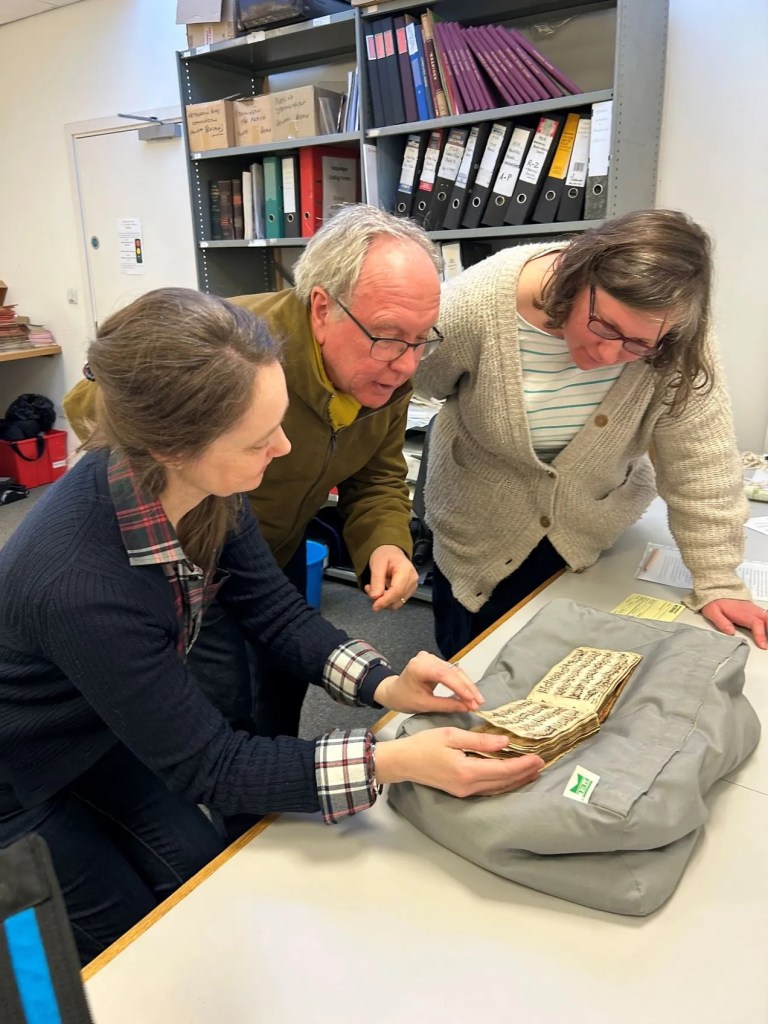
This series though, and the research project which accompanies it, are not so concerned with those deliberately collected songs – many of which form the core of today’s better known ‘traditional’ repertoire, but with the notated and written records made at the time by those who were playing, sharing and at times creating the music. That research project is Music, Heritage, Place , led by Royal Holloway, University of London. This project is exploring artifacts held in local record offices, including tune books, church records, travel journals and much more which are and, very often predate the collecting boom by centuries – reaching back as far as 1500. As well as cataloguing these under documented treasures, the project enables new discoveries about how the music travelled – both across the country and internationally, who played it and where they did so, and often gives insights into performance style, ornamentation and other musical elements.
Most excitingly, this research is not just an academic exercise. Nancy Kerr, who – as well as being a major figure on the folk scene is a lecturer at Newcastle University, has used these archive sources as the basis for new arrangements for The Melrose Quartet – taking performances of this long dormant repertoire off the page and to festivals and venues around the country.
The Song Detectorists series is geographically themed, with each episode visiting a different area of the uk and exploring both the archive material and the stories and places connected to it. These stories will resonate in different ways depending on people’s connection to the area in question and their particular areas of interest. For me a number of broad themes emerged which I found interesting – the perhaps under acknowledged role of notated music in preserving the folk tradition I mentioned earlier.
Another constant source of interest to me is the interface between ‘classical’ music and the folk tradition. In the episode based in Northamptonshire Matthew and Nancy explore a tune book which contains arrangements of Rossini opera arias alongside country dance tunes, as well as a very curtailed symphony movement by Haydn. With no other way of recording or reproducing music these tunes would be heard and played by more people in their cut down folk arrangements than at the few, less accessible full scale performances of the time. The academics and archivists of course explore all of this in much more depth and from a greater knowledge base than I can here. Other episodes explore folk carols (again captured in notebooks even though often thought of as an aural tradition ) and the crossover between church music and musicians and songs sung in social and working contexts.
This series is a really accessible gateway into the deep world of formal research into folk music – offering many pathways to explore further, but, through inclusion of performances by the Melrose Quartet never lets us forget that this music is there for all of us to sing and play today, and that we are all free to arrange and adapt it to our own contemporary contexts to ensure it is as useful and relevant to us as it was to those that provided us with the written records that have survived across centuries.
 From The Edge
Leave a comment